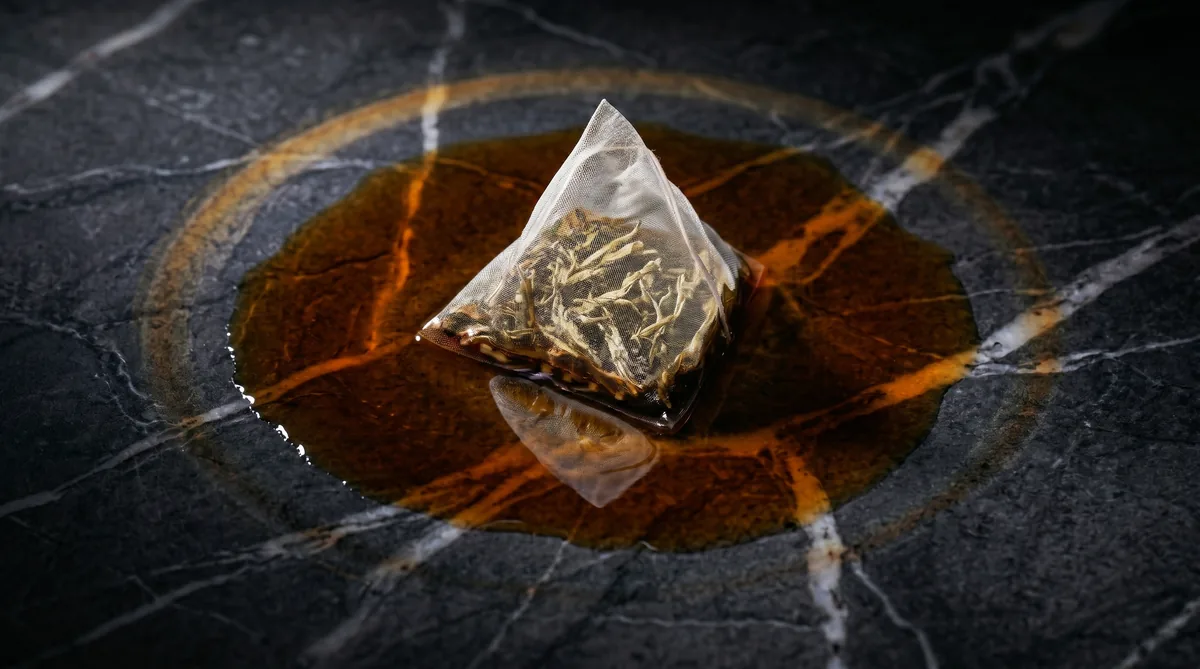
Brewing / White
The lightest leaf. The longest wait.
White tea is barely processed — the youngest buds, plucked once a year, withered in sunlight and dried. Almost nothing has happened to it. Treat the cup the same way.
The premise
White tea is the leaf's first appearance — the silvery, downy bud and at most one or two unfurled leaves below it. No pan-firing, no rolling, no oxidation past whatever happens during the wither. The flavour is correspondingly delicate: melon rind, hay, honeysuckle, a sweetness that sits just behind the water. All of that is fragile. Boiling water cooks it off. Tight infusers crush it. Strong leaf scents in the cupboard get into it. Treat it gently in every direction.
Temp
175°F
Time
4–5 min
Leaf
2 tsp / 8oz
Re-steeps
3–4
By style
Silver needle, white peony, jasmine silver — three weights of white.
Silver Needle (Bai Hao Yin Zhen) — 170°F, 5 min. The pure-bud grade. Floral, melon, almost no astringency. A Vahdam Silver Needle brewed under four minutes will read like warm water — push it. Silver needle is the one white tea where a slightly longer steep is the right move.
White Peony (Bai Mu Dan) — 180°F, 3 to 4 min. Bud plus one or two leaves — a heavier, more rounded white. A Bai Mu Dan handles a slightly hotter pour without complaint. More body than silver needle, less subtlety.
Premium White Peony — 180°F, 3 min. The whole-leaf grades like Tealyra Premium brew faster and cleaner — back the time down to three.
Jasmine Silver Needle — 175°F, 4 min. Silver needle scented with fresh jasmine blossoms. A jasmine silver needle needs four full minutes for the scenting to bloom into the cup. Under-brew and you taste only the base.
The sequence
Heat down, leaf up, time long.
- 01. 175°F is the ceiling. A variable-temp kettle makes this trivial. Without one: boil, then rest the kettle three minutes off the heat. White is even more heat-sensitive than green — 180°F is already pushing.
- 02. Warm the vessel — twice. White tea cools fast. A glass pot or porcelain gaiwan rinsed twice with the heated water holds the temperature through the long steep.
- 03. Twice the leaf you'd use for green. Two teaspoons per 8oz, loose, in a wide basket. Use the FORLIFE infuser with room — the buds need to float free.
- 04. Pour gently over the side of the vessel. Direct impact onto silver-needle buds bruises them and the cup goes slightly green and grassy. Slow stream down the inside wall.
- 05. Four to five minutes, covered. White tea brews longer than every other tea on the shelf — and unlike all of them, it doesn't pull bitter past the window. The risk on a long white steep isn't astringency; it's losing the floral and going woody. Five is the standard cup. Eight is too far.
- 06. Re-steep — add a full minute. Steep two at 5 to 6 minutes, steep three at 7. The leaf has stamina; the second infusion is often the sweetest of the three.
What goes wrong
Tastes like warm water. Under-brewed. White tea is the one varietal where most people brew it too short. Add two minutes.
Grassy, slightly bitter. Water was too hot. Drop ten degrees and brew again.
Hay or musty notes. Old leaf. White tea keeps better than green, but year-old silver needle has already turned the corner. Check the harvest date.
No second steep. Used too little leaf for the first cup. White tea wants volume — measure heavier than feels right.
The cold-brew detour
White tea is the best candidate in the tea cabinet for cold brewing. A heaping spoon of silver needle in a cold-brew bottle with cold water, eight hours in the fridge, and the cup comes out clear, floral, and naturally sweet. No bitterness at all — the lower extraction temperature pulls only the cleanest of the leaf's compounds. Better than iced black, and a better summer drink than most people expect.
House note
Most white teas are under-brewed because they look so delicate. Twice the leaf, five full minutes — that's where the cup is. Patience is the recipe.